| |
Attrition and Delays in Kidney Transplant Evaluation
Among People Living With HIV and End-Stage Renal Disease
|
| |
| |
13 August 2026
Download the PDF here
The causes of ESRD in PLWH are multifactorial. HIV-associated nephropathy (HIVAN), historically a leading cause, has declined with the use of ART, as it is associated with uncontrolled viremia [4, 5]. However, certain ART medications are nephrotoxic [6], and PLWH remain at increased risk for chronic kidney disease due to comorbidities such as diabetes, hypertension, and hepatitis C virus (HCV) infection, contributing to the elevated ESRD risk in this population [7-9].
ABSTRACT
Introduction
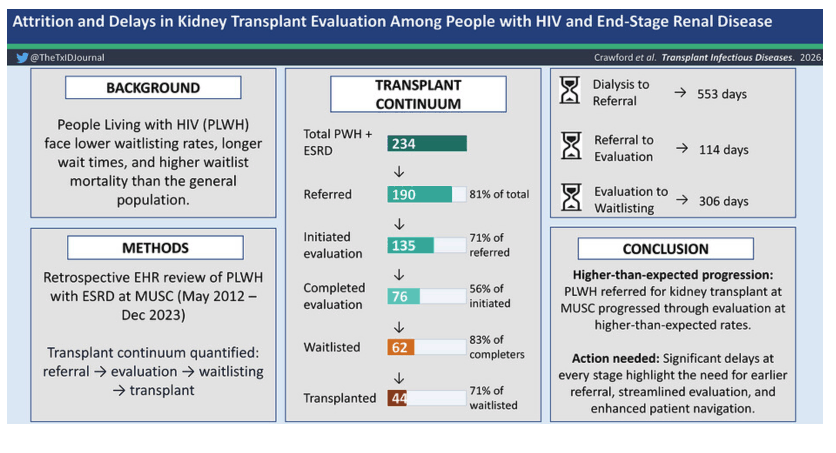
People living with HIV (PLWH) have a higher incidence of end-stage renal disease (ESRD) than HIV-negative individuals and are less likely to receive a kidney transplant. We described attrition and delays across the transplant care continuum for PLWH with ESRD at the Medical University of South Carolina (MUSC) and explored factors associated with waitlisting.
Methods
Retrospective review of electronic health records of PLWH with ESRD who received care at MUSC or were referred for kidney transplantation between May 1, 2012 and December 31, 2023. Progression through the transplant continuum (referral, evaluation initiation, evaluation completion, waitlisting, and transplantation) was quantified. Multivariable time-to-event analyses was performed.
Resultss
Among 234 PLWH with ESRD, transplant referral occurred in 190 (80%), of whom 135 (71%) initiated evaluation, 75 (39%) completed evaluation, 62 (32%) were waitlisted, and 44 (23%) received a transplant. Among evaluation non-completers, outstanding testing (42%) and excessive comorbidities (15%) were the most common reasons. Median time from dialysis to referral was 510 days (IQR 139-1665), and median time from evaluation to waitlisting was 306 days (IQR 186-520). In multivariable Cox regression, peritoneal dialysis was associated with shorter time to waitlisting (HR 2.60; 95% CI 1.17-5.75; p = 0.02) and Black race trended towards longer time to waitlisting (HR 0.30; 95% CI 0.08-1.11; p = 0.07).
Conclusionss
Although PLWH with ESRD at MUSC progressed through the transplant continuum, substantial delays were observed. Interventions to reduce structural and logistical barriers and streamline evaluation steps may improve timely access to kidney transplantation.
|
|
| |
| |
|
|
|


