| |
Evolution of Untreated Anal High-Grade Squamous Intraepithelial Lesions in High-Risk Men: A Prospective 5-Year Clinical Follow-up in the ANRS-EP57-APACHES Study
|
| |
| |
Clinical Infectious Diseases, 14 August 2026
Download the PDF here
This first description of the long-term evolution of untreated anal hHSIL showed that 75% of hHSILs will regress by 5 years. The strongest predictors of hHSIL regression were absence of the methylation markers ASCL1 and ZNF582, which predicted persistent hHSIL better than anal cytology alone.
In conclusion, we show that hHSILs frequently regress under regular HRA surveillance, with most resolving within 5 years. Methylation markers, HPV-16 persistence, and HSIL cytology were strongly associated with the absence of hHSIL regression (ie, persistence) and may guide risk stratification and management protocols.
Abstract
Background
Histologically confirmed anal high-grade squamous intraepithelial lesions (hHSILs) are targets for diagnosis and treatment in anal cancer screening programs. However, the long-term natural history of untreated hHSILs remains poorly understood.
Methods
In the APACHES study, 513 human immunodeficiency virus (HIV)–positive men who have sex with men and were aged ≥35 years underwent 3 annual visits for anal cytology, human papillomavirus (HPV) testing, and high-resolution anoscopy with biopsies to detect hHSILs. hHSILs were not treated but were monitored every 6 months for up to 5 years. Methylation markers, ASCL1 and ZNF582, were assessed in biopsy specimens at hHSIL diagnosis. The hHSIL regression probability was estimated using Cox proportional hazards models, adjusted hazard ratios, and Kaplan-Meier survival curves.
Results
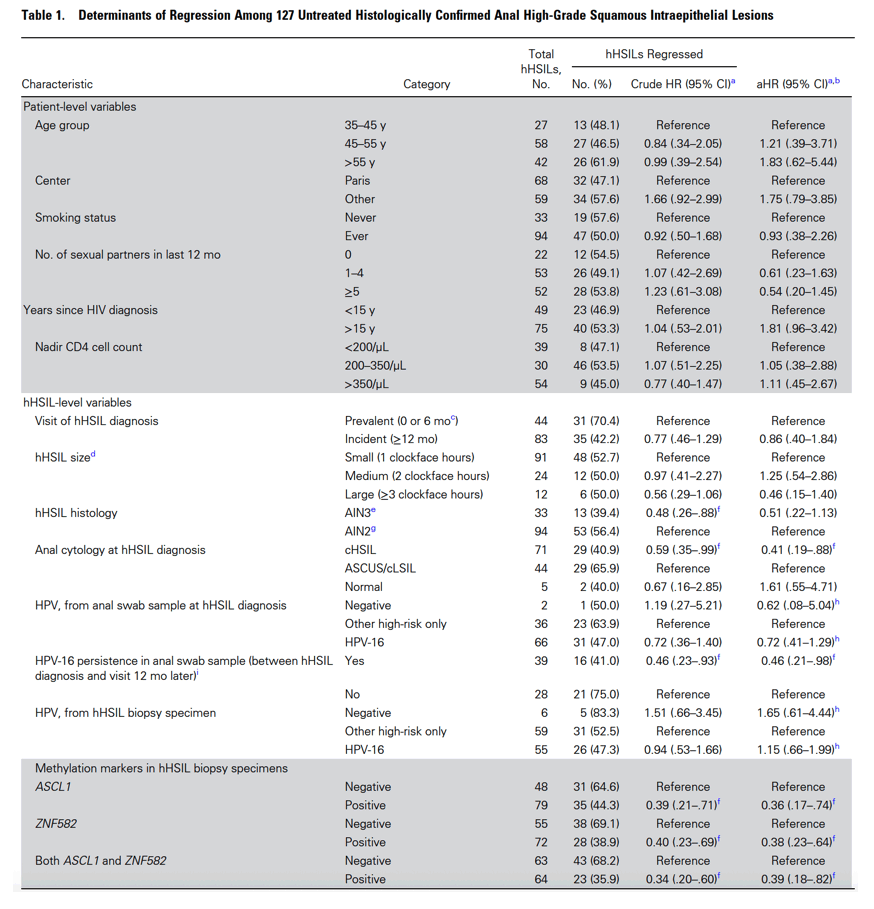
Of 127 untreated hHSILs, 21% regressed within 1 year, 41% within 2 years, and 75% within 5 years. None progressed to cancer during follow-up. Regression was significantly less likely for hHSILs with concurrent high-grade findings at anal cytology (adjusted hazard ratio, 0.41 [95% confidence interval, .19–.88]), 12-month persistent HPV-16 infection in anal swab samples (0.46 [.21–.97]), or positivity for both ASCL1 and ZNF582 (0.39 [.18–.82).
The 5-year regression probabilities ranged from approximately 30% for ASCL1/ZNF582-positive hHSILs with high-grade cytology, to approximately 90% for ASCL1/ZNF582-negative hHSILs without high-grade cytology. hHSIL regression was not influenced by age, smoking, or HIV-related markers.
Conclusions
Only one-quarter of untreated hHSILs persisted at 5 years, representing lesions with the highest anal cancer risk. The methylation markers ASCL1/ZNF582 were the strongest predictors of persistent hHSIL and, combined with HPV testing and cytology, may inform prioritization for diagnosis and treatment in anal cancer screening programs.
|
|
| |
| |
|
|
|


