| |
Older Age, Modifiable Risk Factors, Comorbidities & Hospitalization in PWH: Hospitalization Rates and Associated Factors Among Older Adults With HIV in the United States
|
| |
| |
Download the PDF here
Download the PDF here
advancing age is associated with increased susceptibility to disease.6,7 Thus, the combination of chronic HIV and advanced age is likely to result in an increased risk of severe disease requiring hospitalization.
HAILO is a longitudinal, multisite cohort study of older PWH who enrolled participants aged $40 years old between 2013 and 2014, with follow-up through 2021.
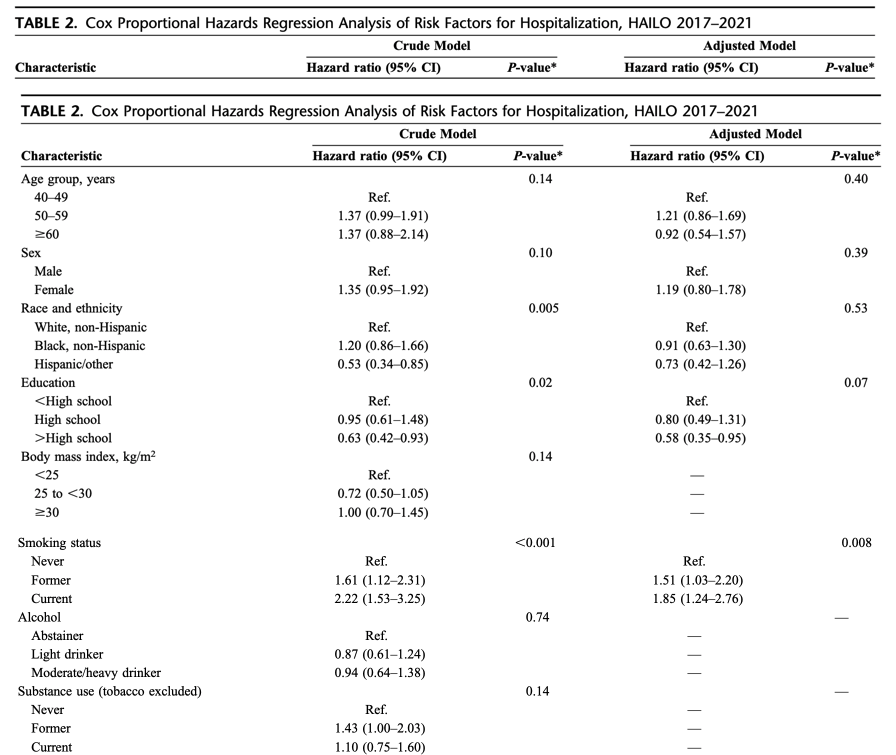
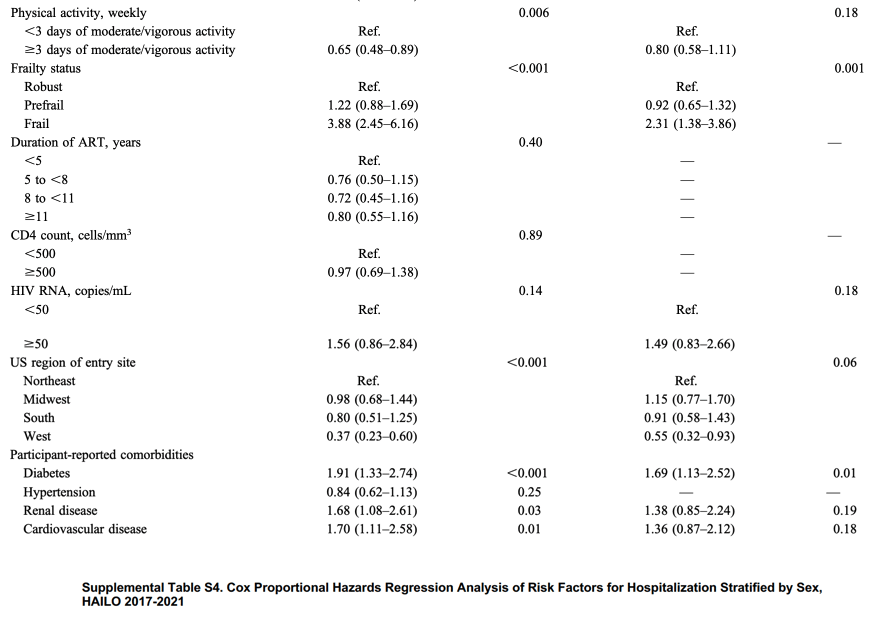
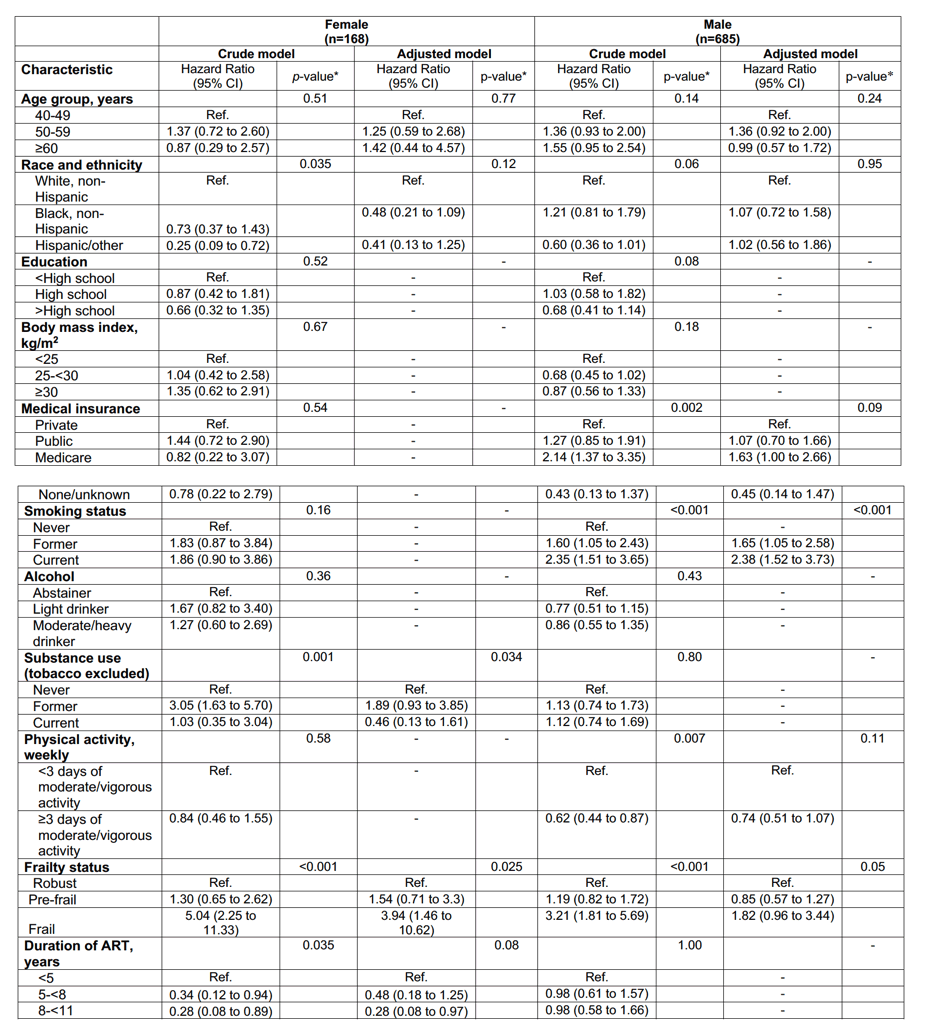
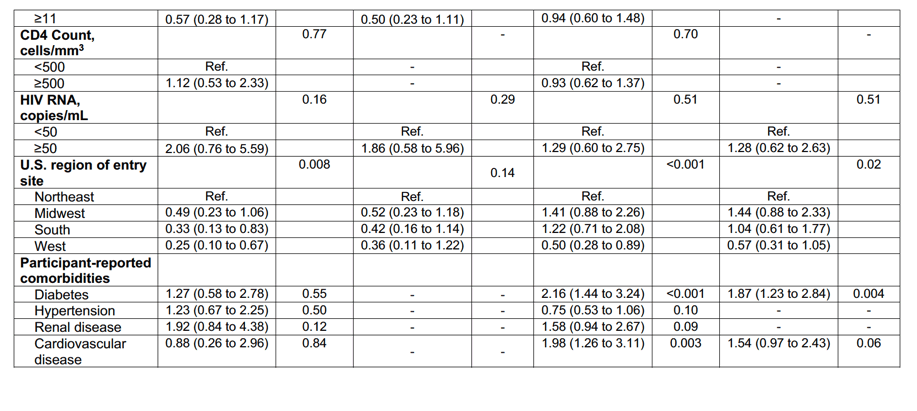
We also identified many modifiable risk factors that may have contributed to hospitalization including smoking, frailty, and diabetes. Not surprisingly, smoking was associated with hospitalization, similar to studies in the general population,31,32 and likely additionally reflected in the increased comorbid disease burden seen among smokers. We did not see increased risk with alcohol use or substance use. Frailty has also been associated with increased risk for disease20and hospitalization.33,34 Cardiovascular, endocrine, respiratory, gastrointestinal, and other disorders are associated with a greater frequency in people with diabetes,35,36 likely contributing to the increased risk of hospitalization.
We also identified many modifiable risk factors that may have contributed to hospitalization including smoking, frailty, and diabetes. Frailty has also been associated with increased risk for disease20 and hospitalization.33,34 Cardiovascular, endocrine, respiratory, gastrointestinal, and other disorders [renal disease] are associated with a greater frequency in people with diabetes,35,36 likely contributing to the increased risk of hospitalization.
Causes of Hospitalization
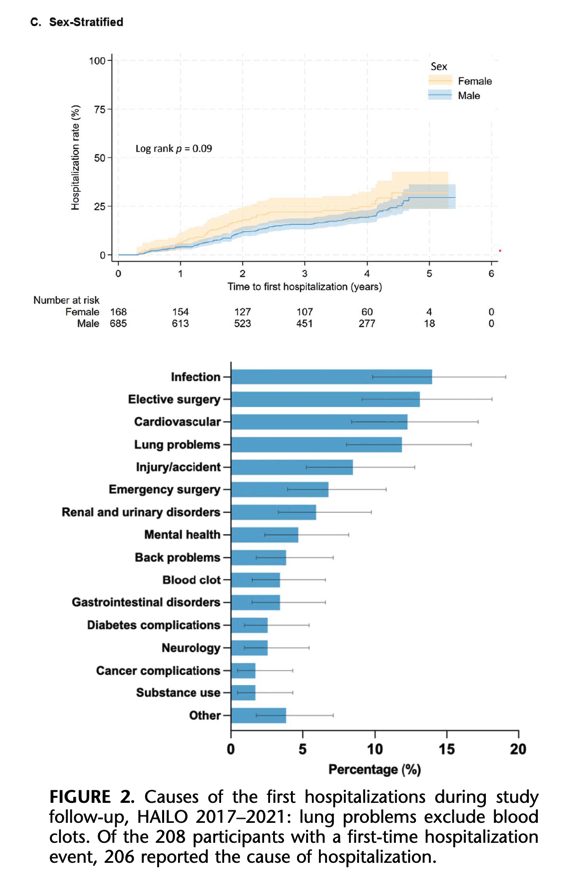
Overall, the most common participant-reported causes of hospitalization were infections (14.0%), elective surgery (13.1%), cardiovascular conditions (12.3%), and lung problems (11.9%) (Fig. 2). Among elective surgeries, orthopedic and joint procedures were the most frequent, accounting for 32%, followed by spine surgeries (23%), cardiovascular interventions (16%), gastrointestinal or abdominal surgeries (13%), urologic surgery (6%), and other procedures (10%). The leading causes of hospitalization varied by age group (see Figure S1, Supplemental Digital Content, http://links.lww.com/QAI/C683). Among individuals aged 40-49 years, infections (17.4%) and lung problems (16.3%) were most common. In the 50-59 age group, elective surgery (17.0%) and cardiovascular conditions (17.0%) were the most frequently reported. Among those aged ≥60 years, infections and injury/accident were the most common causes of hospitalization, accounting for 18.4% and 15.8%, respectively.
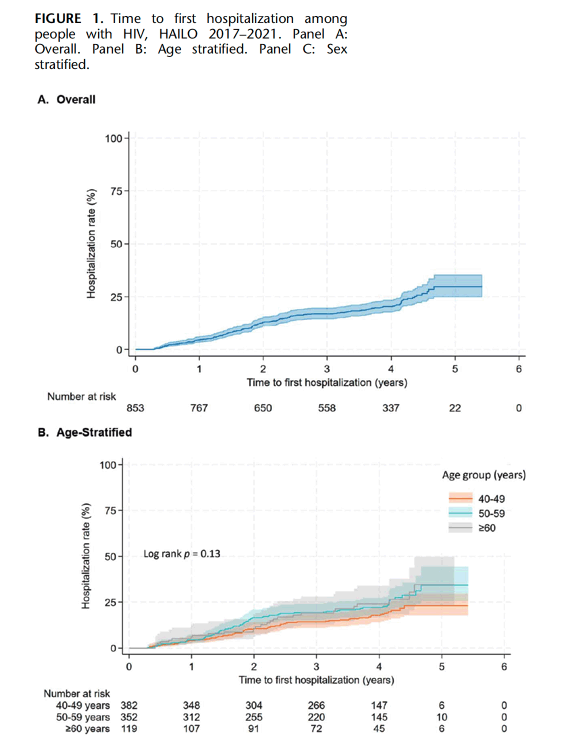
About hospitalization risk factors, we found more hospitalizations in the older age groups and among women (see Table S4, Supplemental Digital Content, http://links.lww.com/QAI/C683), similar to previous studies,8 although neither difference was statistically significant.
In summary, we observed a lower risk of hospitalization compared with previous studies of PWH, with infection-related and cardiopulmonary problems the leading causes of hospitalization. We also identified several potentially modifiable factors, suggesting that interventions for smoking cessation, preventing or attenuating frailty, and managing comorbidities such as diabetes may further reduce hospitalization among older PWH.
|
|
| |
| |
|
|
|


